
A Money + Meaning Conversation on Building Healthy, Inclusive, and Thriving Local Economies
In a moment when communities are feeling real pain in real time, place-based investing offers something many capital strategies can’t: urgency, context, and accountability to the people who live with the outcomes.
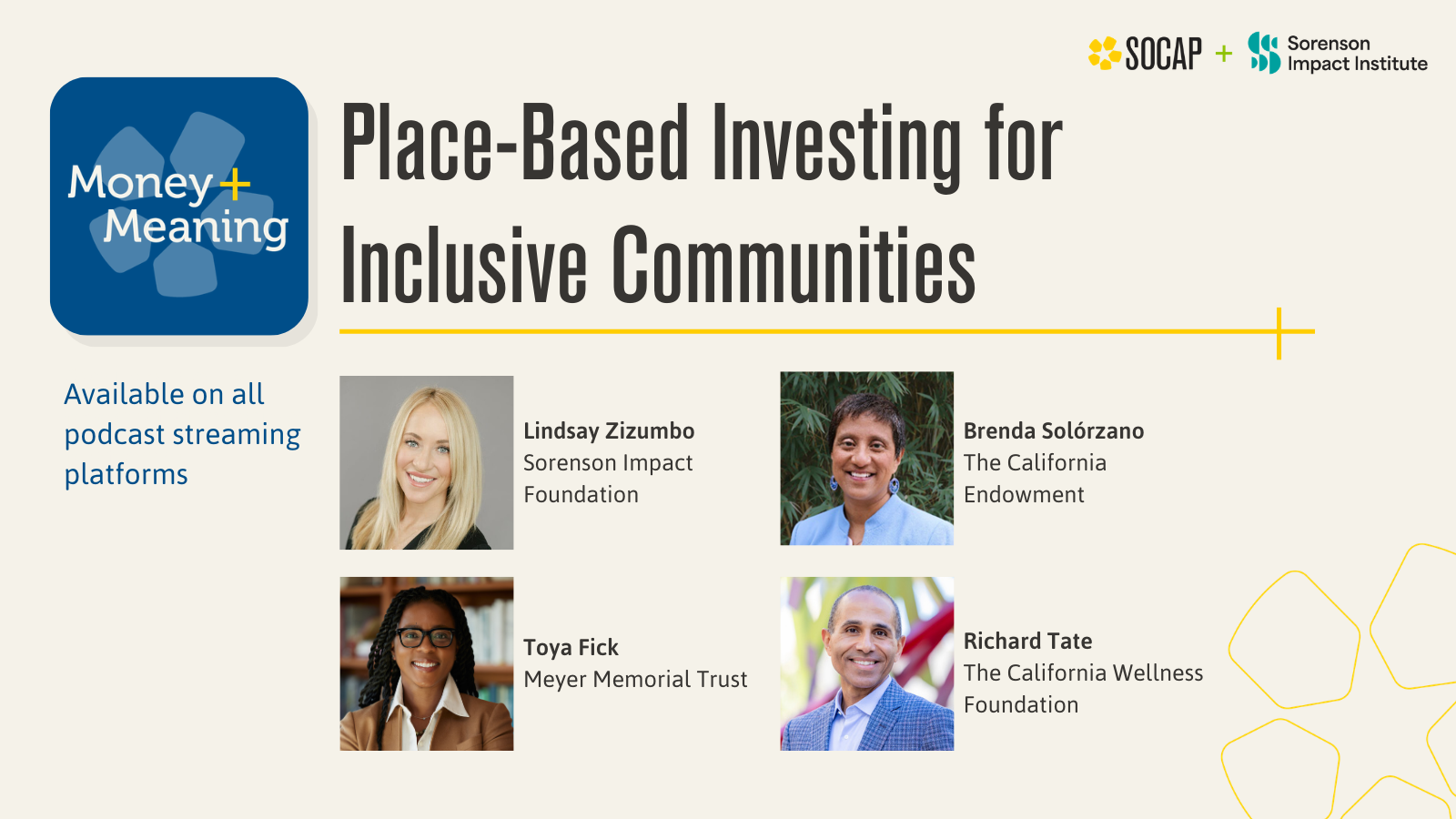
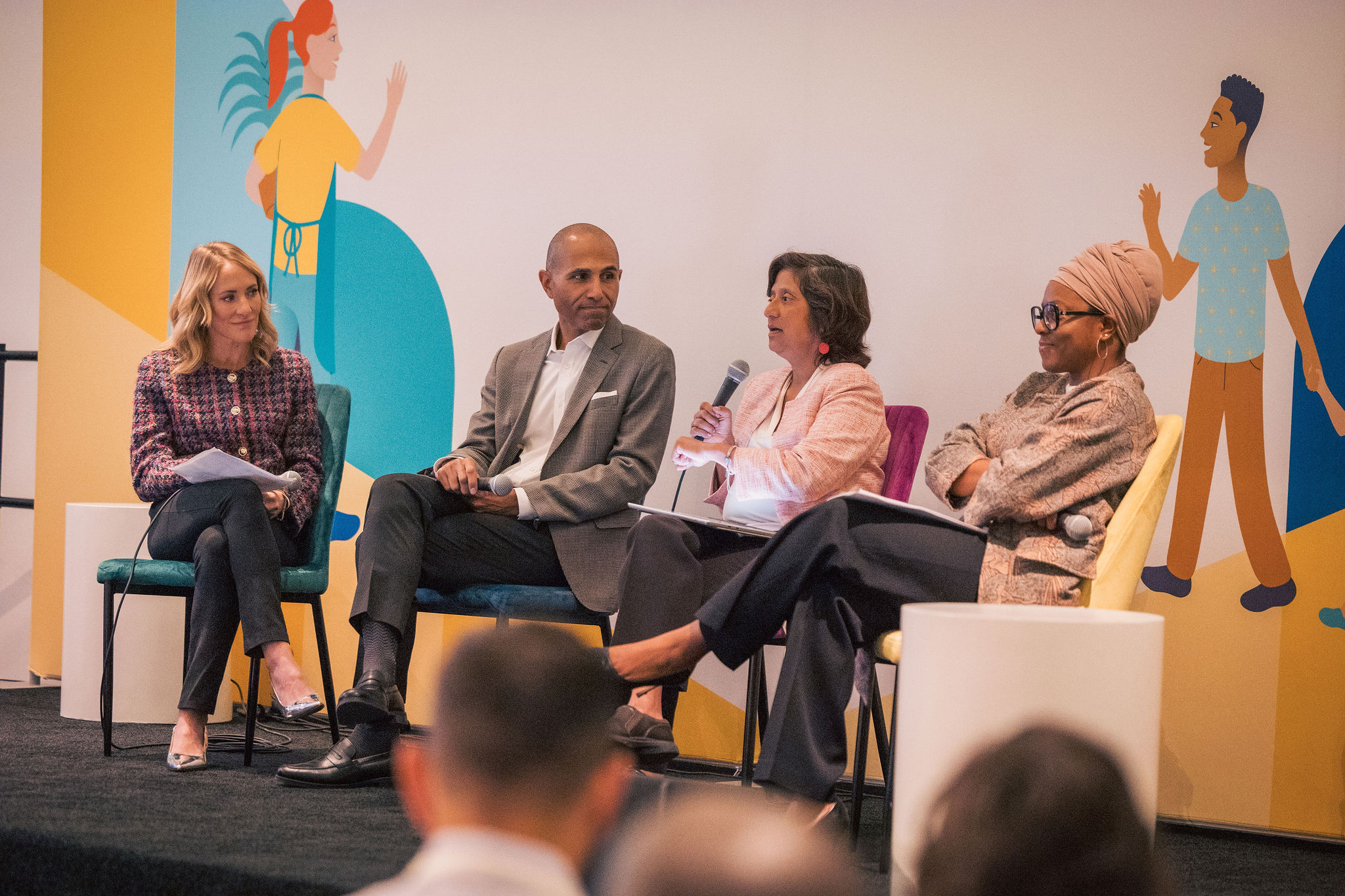
Recorded live at SOCAP25, this episode of Money + Meaning brings together foundation leaders pushing beyond the traditional “5%” grantmaking model and putting their full balance sheets to work. The panel explores what it actually takes to align endowments with mission, how internal teams are restructuring to break down silos, and why collaboration across institutions isn’t optional — it’s part of the responsibility.
The conversation features:
- Lindsay Zizumbo, Sorenson Impact Foundation (moderator)
- Toya Fick, Meyer Memorial Trust
- Brenda Solórzano, The California Endowment
- Richard Tate, The California Wellness Foundation
Moving Beyond the 5%: ‘All In’ as a Leadership Decision
Moderator Lindsay Zizumbo opened by naming the “volatile and dire” reality many communities are navigating and why place-based capital can respond differently than capital deployed from a distance. “I think we all know that place-based capital can meet needs with urgency, with context, with purpose … non place-based capital doesn’t,” Zizumbo said.
Each leader on the panel described an “all in” approach: not just funding solutions through grants, but aligning endowment investments with mission as part of a foundation’s core strategy. Richard Tate, President and CEO of The California Wellness Foundation, described a billion-dollar foundation committing its full endowment to mission alignment, not as a side program, but as a fundamental shift in how the institution understands its responsibility.
“As a foundation, our work is at the intersection of health and racial justice,” Tate said. “We reframed our entire strategy to include our endowment investments. That’s not a separate part of how we think about our mission. All of our capital is moving to address community needs.”
The Hard Part Isn’t the Decision — It’s the Execution
Across the panel, one theme came through clearly: Saying “we’re going all in” is easier than doing it. Brenda Solórzano, President and CEO of The California Endowment, spoke candidly about the complexity of shifting a long-established investment portfolio and the internal change-management required to make “mission-aligned” real. “Our board made a commitment to push all $4 billion of our capital into mission-aligned investments,” she said. “It’s much harder to do than to say.”
One of the biggest barriers was internal silos. “There was very little conversation among the different departments,” Solórzano said. “Oftentimes, the right hand didn’t know what the left hand was doing, and we were investing in ways that were contradictory.”
To address that, The California Endowment has begun restructuring — moving PRI staff into the main investment team and aligning around shared strategic goals across the enterprise. Solórzano described a future model built around cross-functional “Avenger teams” that include program, investment, communications, technology, and finance staff working together around specific geographic communities.
Richard Tate echoed the need for internal shifts, emphasizing that mission alignment requires more than asking an outside advisor to “do impact.” “It was insufficient to simply ask our outside investment advisor to help us align our endowment to our mission,” he said. “Their whole system — the incentives that drive their work — are very different.” Instead, foundations must build internal capacity and rethink how capital functions across the organization. “We’ve had to reset our mindset,” Tate said. “Impact isn’t just grant dollars. It’s what we’re doing with the endowment as well.”
Meeting the Moment: Spend Rates, Tradeoffs, and ‘How Much Is Enough?’
The panel also surfaced a tension many foundations are facing right now: balancing long-term stewardship with urgent community needs. Solórzano shared that The California Endowment has doubled its payout — increasing grantmaking from 5% to 10% over the next three years — because communities can’t wait for portfolio transitions to unfold over time.
“Our grantees are saying, ‘We need resources now. We can’t wait for you to undo your capital investments,’” she said. Tate described similar conversations at California Wellness, where elevated payout rates force foundations to grapple with a core question: “How much is enough? Do we really need to be holding on to it at all, or does it need to be moving to communities as communities need it?”
What Place-Based Investing Looks Like on the Ground
When Zizumbo asked for concrete examples, Tate shared how foundations can combine different “pools of capital” — grants plus program-related investments — to strengthen community outcomes.
In Little Tokyo in Los Angeles, Cal Wellness paired a $1.5 million PRI supporting housing and business development with a $500,000 grant supporting advocacy and organizing to shape that development over time.
He also described investments designed to shift who gets to make decisions about capital, including the Real People’s Fund in the Bay Area, where community members help determine who receives seed funding.

Collaboration Isn’t a Nice-to-Have — It’s Part of the Job
One of the most consistent through-lines in the conversation was collaboration not as a branding value, but as an operational requirement. “Collaboration isn’t just a strategy,” Tate said. “I think it’s actually a responsibility. One institution is not going to change the world.”
He described a collaborative response to the LA wildfires in which multiple foundations shared due diligence and coordinated funding to accelerate dollars into impacted communities. “Collaboration doesn’t magically happen,” he said. “Someone has to take the lead.”
When an audience member asked about the lack of national infrastructure to identify and fund local wealth-building innovations, the panel agreed the field still has a gap. “I don’t believe that that place exists,” Tate said, noting the need for deeper data-sharing and coordination beyond informal learning networks. Solórzano named another barrier plainly: “Ego has been huge in philanthropy,” she said. “Egos of CEOs and boards have really been driving toward not collaboration.”
Taking on Risk: From Reputation Management to Institutional Courage
In the closing Q&A, the conversation turned to reputational risk, especially when engaging upstream systems and working in contested industries. Tate acknowledged heightened scrutiny but argued that retreating into caution shifts risk onto communities. “We still have institutional voice and influence,” he said.
Solórzano framed the moment even more directly: “What’s happening now is not normal. It’s not okay,” she said. “We have a responsibility… to be bold and unapologetic.” She emphasized that foundations occupy a unique position of freedom. “We don’t get voted out,” she said. “We have a lot of liberty, and it’s incumbent on us at this moment to use that power.”
Listen to the episode for the full discussion:
Don’t miss out! Subscribe to Money + Meaning on Apple Podcasts, Stitcher, TuneIn, Spotify, or anywhere else you find podcasts.
Listen to more episodes of Money + Meaning here.