Four SOCAP25 Sessions Explore How Values-Aligned Capital Can Reshape Emerging Technologies for Long-Term, Scalable Impact
At SOCAP25, leaders from across sectors and around the world explored how capital, when invested in the right ways, can turn harmful emerging technologies into powerful resources for scalable, positive impact. Sessions spotlighted both technology’s harmful, extractive effects on society, from the social media-induced youth mental health crisis to the resource-intensive demands of AI, while also promoting opportunities for improvement by sharing examples of responsible technology in action.
Throughout a series of sessions, advised by the Siegel Family Endowment through a custom partnership, investors, fund managers, educators, and others challenged audiences to reimagine existing systems to unlock technology’s value and identify new capital flows to make it a reality. In the SOCAP25 sessions featured below, panelists push for a future where technology and capital are consciously aligned with regenerative values, guided by inclusive governance, and used to enable better decisions at scale for positive long-term social, economic, and environmental outcomes.
Don’t miss your chance to participate in sessions like these at SOCAP26, October 12-14, 2026, in Chicago. Learn more and register here!
Building an Investment Ecosystem for Responsible Technology
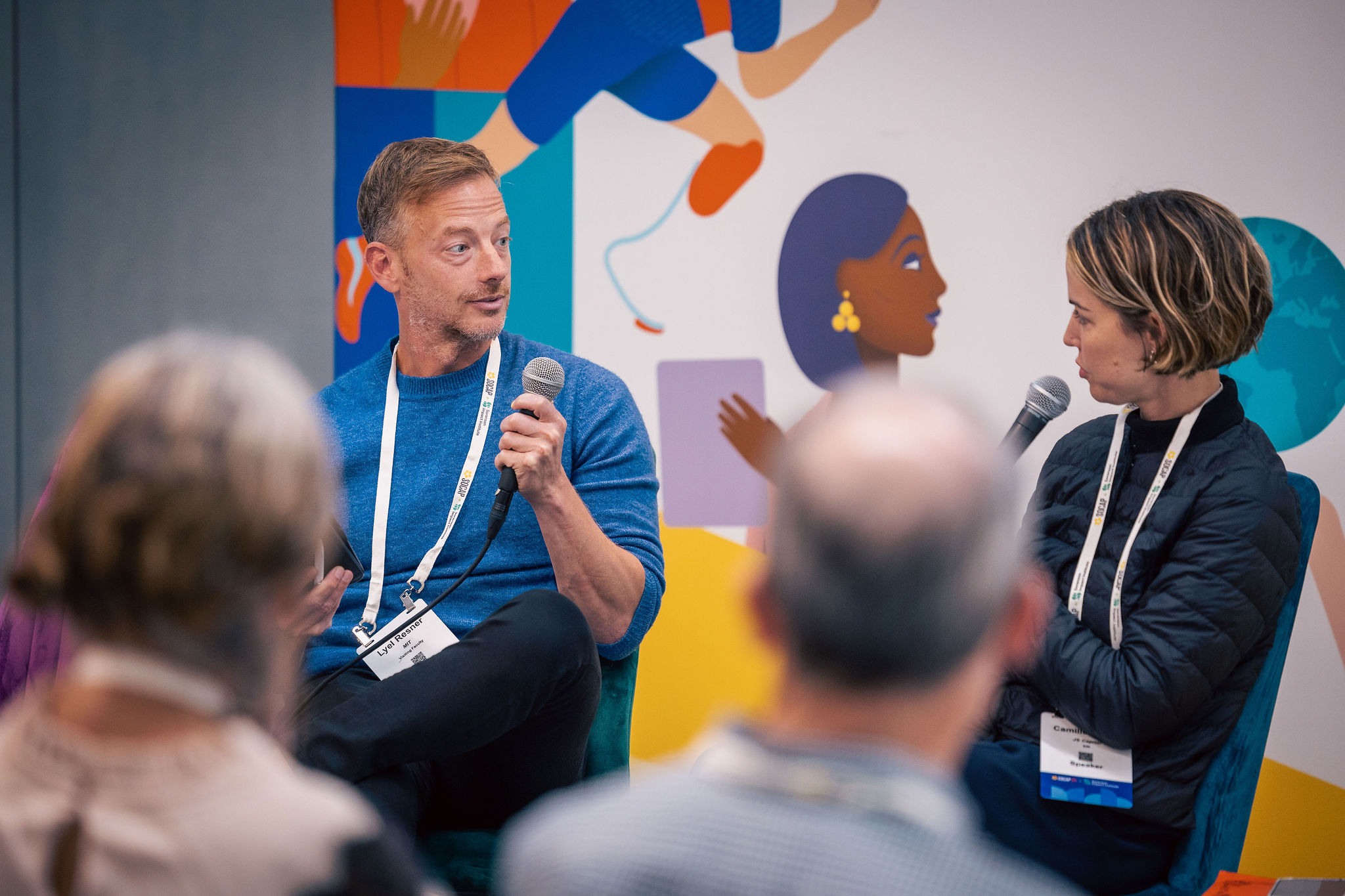
Featuring: Lyel Resner | MIT, Camille Canon | JS Capital
“When we think about responsible innovation and responsible tech, often we think about fairness and transparency and bias and algorithms, but I think it’s important to frame it as much more than that,” said Lyel Resner in the SOCAP25 session “Unlocking $10B for Responsible Tech.” “The technology that we build disproportionately defines how we live, work, and play. … Our window for being able to steer technology in a different direction is closing, I would argue, every day.”
This SOCAP25 session explored the current state of responsible technology investment, examining how capital structures — from traditional venture capital’s misaligned incentives to AI’s resource-intensive demands — prevent responsible technology from emerging while compounding extractive practices.
Beginning with a conversation about the critical relationship between capital and technology development, participants were then asked to collaborate in problem-solving discussions to consider their role in this and imagine what new forms of capital and investor relationships are needed to support responsible technology that provides a positive impact. Participants share unique experiences and perspectives, introducing how individuals and institutions can build a new investment ecosystem.

Technology in Service of Nature: Financing Regenerative Conservation
Featuring: Benito Juarez | Regen/FabLab Peru, Aldo Soto | Amazonia Impact Ventures, Wahleah Johns | Tonizhoni Academy, Carlo Angeles | C Minds
To begin this critical conversation, moderator Carlo Angeles asks, “How do we integrate ancestral wisdom with emerging technologies and financial flows, and rewire the frameworks connecting them in order to innovate at scale for nature conservation?”
Conservation is no longer just about protecting nature, but about restoring deep, living connections between ecosystems, local communities, and financial systems that sustain both. This SOCAP25 session offers unique insights and examples of financing nature conservation by integrating ancestral wisdom, emerging technologies, and biocultural finance to drive long-term, inclusive impact.
Panelists share how local stewards implement responsible technology tools such as AI for biodiversity monitoring, blockchain for conservation credits, and regenerative markets to build economic resilience. They explore how this systems-based model is transforming conservation, linking local action with global capital and creating scalable, forward-looking, regenerative strategies.

From Impact Measurement to Management: Leveraging Impact Data for Smarter Investing
Featuring: Carla Grados Villamar | 60 Decibels, Ryan Clancy | Rally Assets, Teresa Yu | Novata, Dean Hand | Global Impact Investing Network (GIIN)
As impact measurement and management (IMM) evolves, the focus is shifting from data collection to decision-making. But how should impact data be managed, and what truly counts as a “good” outcome?
In this SOCAP25 session, panelists identified two major industry-wide barriers. First is data interoperability. Impact data is often collected in different formats and platforms, making it difficult to share or compare across investors and funds. Second is efficiency and cost, as impact measurement is often expensive and burdensome, particularly when data requests are inconsistent or duplicative for investee companies.
Speakers shared unique approaches to addressing these challenges, highlighting that progress in impact measurement depends on better alignment, shared language, and practical frameworks that make impact data comparable, meaningful, and usable, enabling investors to ultimately allocate capital more effectively.

The AI Generation: A High-Impact Opportunity for Investors
Featuring: Rilwan Meeran | American Student Assistance (ASA), Matt Wilkerson | Extern.com, Sam Hyams | Springpod, Yesenia Gallardo Avila | Lemnis
As AI becomes more prevalent in our everyday lives, it is transforming how we live and work. This drastic technological change is having a profound impact on job markets, forcing Gen Z to rethink their careers. Entry-level roles now require at least three years of experience.
In this episode of the Money + Meaning podcast, recorded live at SOCAP25 and co-curated with ASA, investors and founders working across education, workforce development, and philanthropy explore how capital can fund emerging edtech and workforce innovations to help young people thrive in an AI world.
The conversation spotlights early-stage ventures that are enabling continuous reskilling, upskilling, and smarter career navigation. It offers a hopeful, practical roadmap to a more resilient and equitable future of work.
Sarah Sterling has over 10 years of experience working with entrepreneurs, accelerators, investors, and nonprofit organizations on ecosystem building, impact measurement, leadership and organizational management, and fundraising. She’s a natural networker who thrives on connecting organizations for catalytic action and impact and has developed an international network of social entrepreneurs, impact investment funds, major philanthropic organizations, and impact conveners.
She has been with SOCAP Global for over 10 years, first serving as the Executive Director of Entrepreneurship, managing the Fellowship Program, and supporting capital connections between entrepreneurs and funders. In her role as the Executive Director of Programming and Convening, she has helped to guide and lead the development and management of content at SOCAP.